






Email: info@chinavisafreelayovertour.com
Phone: +86-13683536536
WhatsApp/iMessage: +86-13683536536
WeChat: +86-13683536536

Member
National Center for the Performing Arts Details

Tour Code : C0053
Type : Views of the city
City / Province : Beijing
Built in : 2007
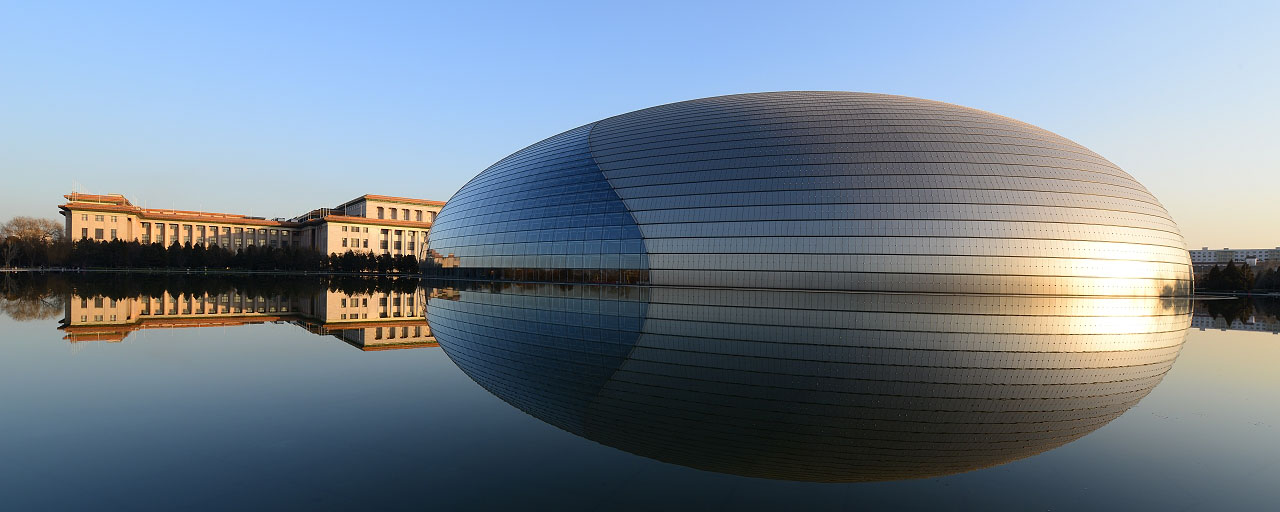
Stroll along the impressive National Theatre for Performing Arts and be blindfolded by the biggest theater in Asia. Enjoy charming night view decorated by neon lights, looking like a giant egg floating on the surface.
National Center for the Performing Arts
National Theatre for Performing Arts
Introduction
Popularly known as the giant egg, the National Centre for the Performing Arts (NCPA) originally known as the National Grand Theater is situated right at the center of Beijing. Its nickname came about due to its distinctive flattened dome shape. The location of the building is like an island in the middle of an artificial lake that measures 35,500 square meters. The lake is surrounded by a green ring measuring 39,000 square meters that are meant to isolate the building from the noise of the city. It has 5,452 seats and holds events in three halls and is almost 12,000 square meters in size. The theatre was designed by French architect Paul Andreu and its construction commenced in the year 2001 and was later inaugurated in a concert held in December 2007. Initially, the budget for constructing the theatre was $393.7 million USD but when it was completed it had cost $468.7 million USD. The government subsidized 80% of the annual operational costs for at least the first three years after its official opening and for the rest of its operational life it would subsidize at least 60% of the annual operational cost.
The location of the theater managed to integrate modern architecture with ancient Chinese architecture but there were a number of controversial issues due to its close proximity to ancient and historical sites such as the Forbidden City, Great Hall of the People and the Tiananmen Square. Andreu included the lake and a green ring in his design in order to complement the ancient architecture and prevent the contrast from being too conspicuous.
The main building is made up of three venues: the Opera House, the Concert Hall and the Theater. The center has underwater corridors, an artificial lake, an underground garage and a green space. The dome covers a total area if 12,000 square meters with a minimum span of 144 meters and a maximum span of 213 meters rising to a height of 46 meters. The building is also considered to be the deepest structure in Beijing with its deepest point being 32.5 meters equal to the height of a 10 floor building. Visitors enter the building through an underwater corridor that stretches below the lake from the green ring. It has a glass ceiling that allows natural light to penetrate through the water producing a vibrant shimmering effect.
Things to see and do on a visit
Exterior Shape
The Dome
The dome measures 212 meters in east west direction, 144 meters in north south direction and 46 meters in height. The building is an ellipsoid dome made of over 18,000 titanium plates and over 1,000 sheets of ultra-white glass which is a low iron glass known for its high rate of light transmission. The building is in the shape of an ellipsoid dome surrounded by an artificial lake and a vast expanse of green space resembling an egg floating on water.
The Lake
Covering an area of 35,500 square meters, this mirror-like lake forms a tranquil atmosphere surrounding the dome.
The Green Belt
Surrounding the lake is a 39,000 square meter green belt that encircles the NCPA harmonizing it with its vicinity in the most peaceful and quiet environment in the middle of the hustle and bustle of the city.
The Interior
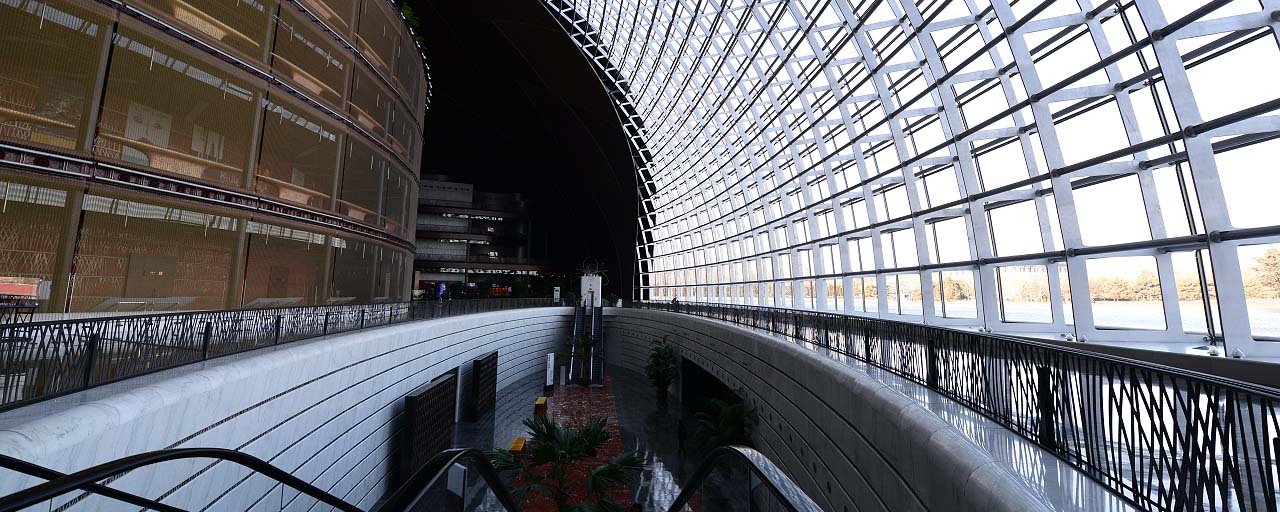
To enter the building visitors have to follow a hallway that passes underneath the lake. The titanium shell is divided by a glass curtain on one side narrow on the top and wide on the bottom. The corridor stretches 80 meters long beneath the lake providing a unique passage to the center’s hall. Its glass ceiling allows light to pass through the water producing a shimmering effect. There is a large open foyer with a floor made of stone from 10 different regions in China.
Opera House
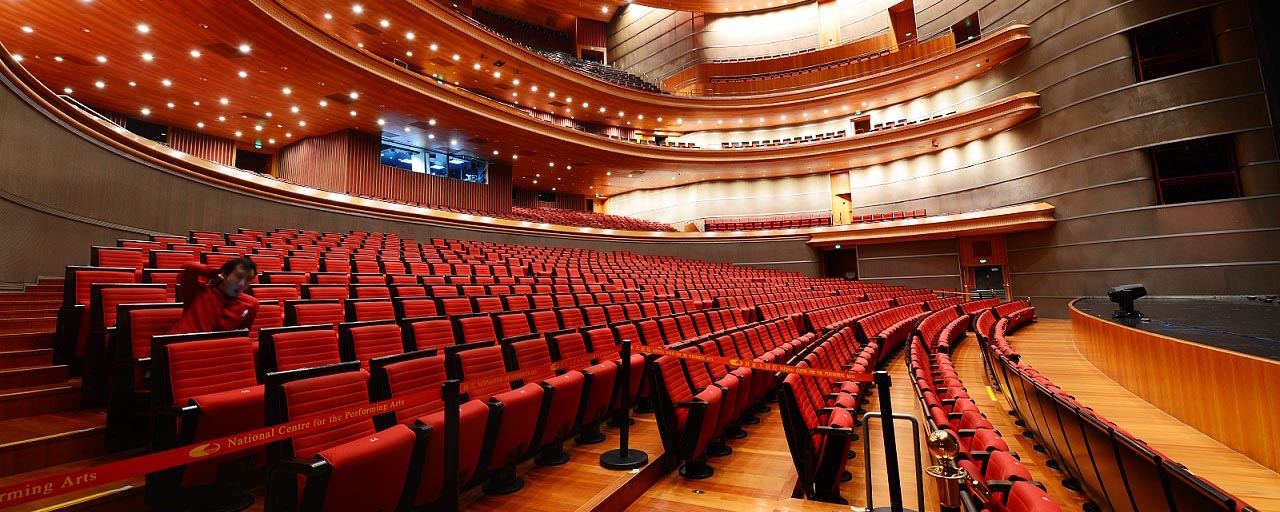
This is the most magnificent building in the National Centre for the Performing Arts. Ballets, dance dramas and operas are staged here. The opera house has the largest ballet stage in China and its surface is made of Oregon timber. It has 2,091 seats and has a golden color as its main hue. The arc-shaped metal net wall in the auditorium allows lights and shadows to change as the performance changes.
Concert Hall
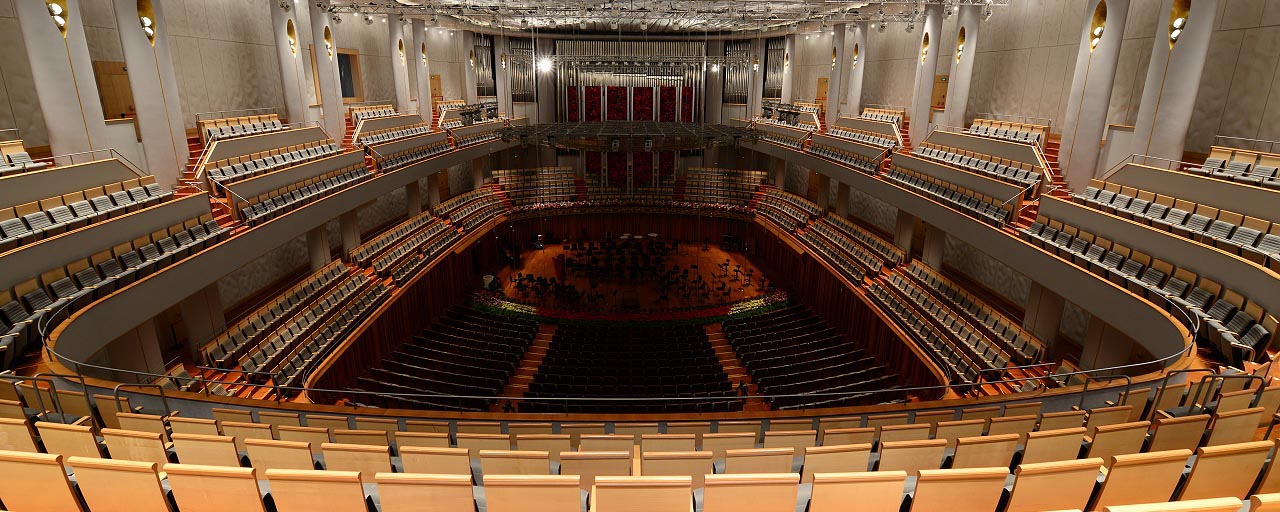
The Concert hall is located on the eastern side of the Opera House and is the place where Chinese traditional music and grand symphonies are performed. The hall has 1,859 seats and its specialized design promotes the perfect integration between acoustic aesthetics and architectural grounds. For instance, the design of the ceiling is designed in a roll like waves and is propitious to the diffusion of sound. In addition, the round shaped auditorium enables audiences to enjoy performances from any angle. The hall also has a silver-white color that makes it serene and elegant at the same time. The concert hall has a unique pipe organ placed in the hall with 94 stops and an impressive array of 6,500 pipes which is the largest one in Asia.
Theater
The theater has a capacity of 957 seats excluding the orchestra. Stage plays, traditional Chinese operas and national songs and dances are performed in the theater. The theater adopts a distinct traditional Chinese design with Zhejiang's flameproof silk walls. It fully highlights the closeness between the audience and the performers.
Auditorium
Air inlets of the air conditions are built under the seats. While seeing the performances, the audience will not feel the wind but will enjoy the coolness. What's more, noise elimination equipment is also installed. No noise will be made when you have to leave while the performance is going on.
Great Wall Layover Tour from Beijing Airport
Beijing Airport Layover Tour
Top Attractions of Beijing Layover Tour
Great Wall Layover Group Tour
>>Great Wall Sunrise and Sunset Layover Tour
>>Mutianyu Great Wall Layover Tour
>>Simatai Great Wall Layover Tour
>>Badaling Great Wall Layover Tour
>>Huanghuacheng Great Wall Layover Tour
>>Juyongguan Great Wall Layover Tour
>>Jinshanling Great Wall Layover Tour

Got Question & Quick Answer


©2013- www.chinavisafreelayovertour.com

Introduction

Recommend Tour

FAQ
 Home
Home









Entertainment :
Cultural Value :
Environmental Quality :